Lifestyles Transitional Homes

A ministry in a home environment · from the Torah perspective

LifestylesTransitional Homes

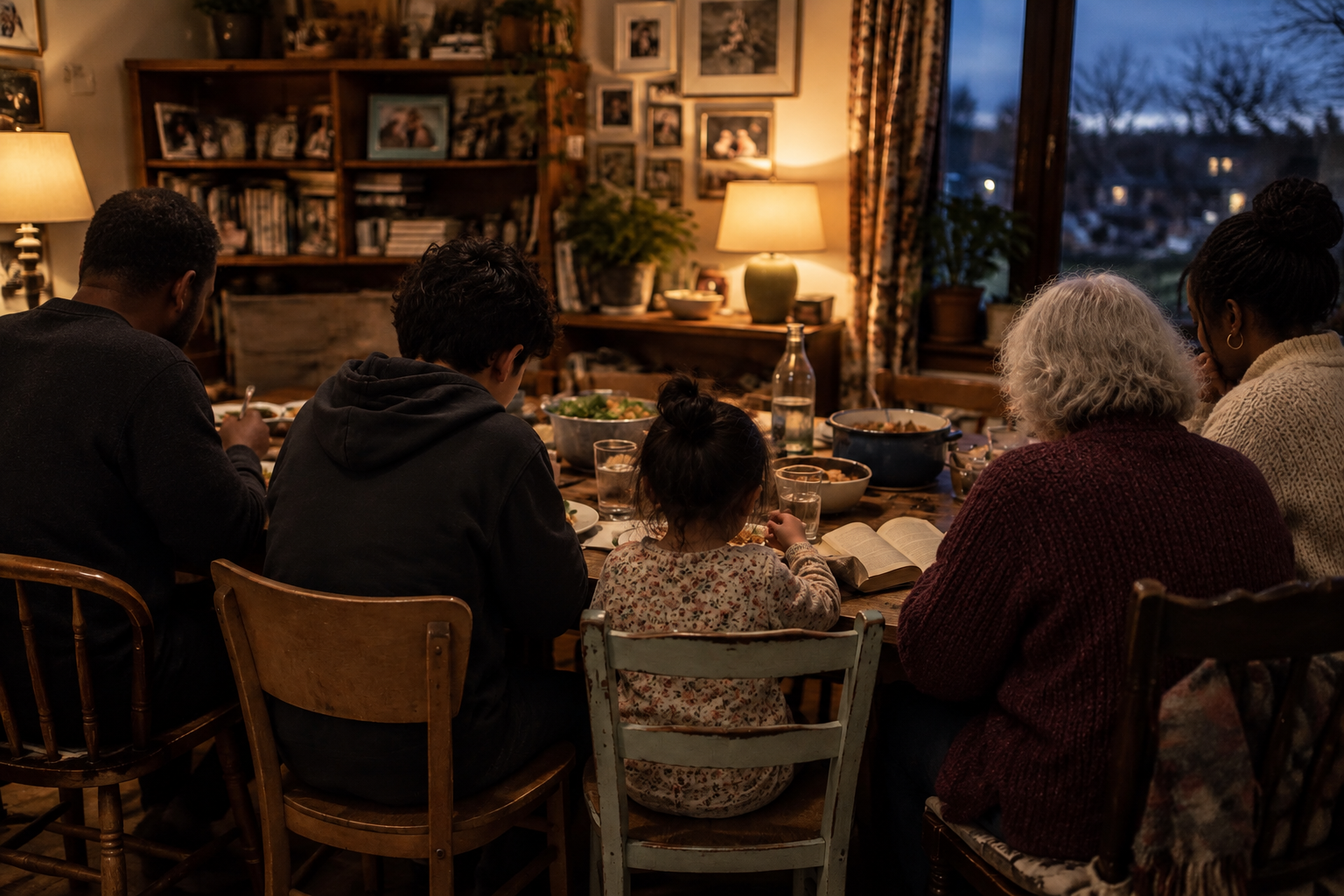
Not a building you visit once a week, but a household that keeps the day together: morning devotions, the Word taught at the table, prayer, and one long table where everyone at it has a place and a part. Our arms are open — reach out, sit down with us, and see whether this household is a place for you.

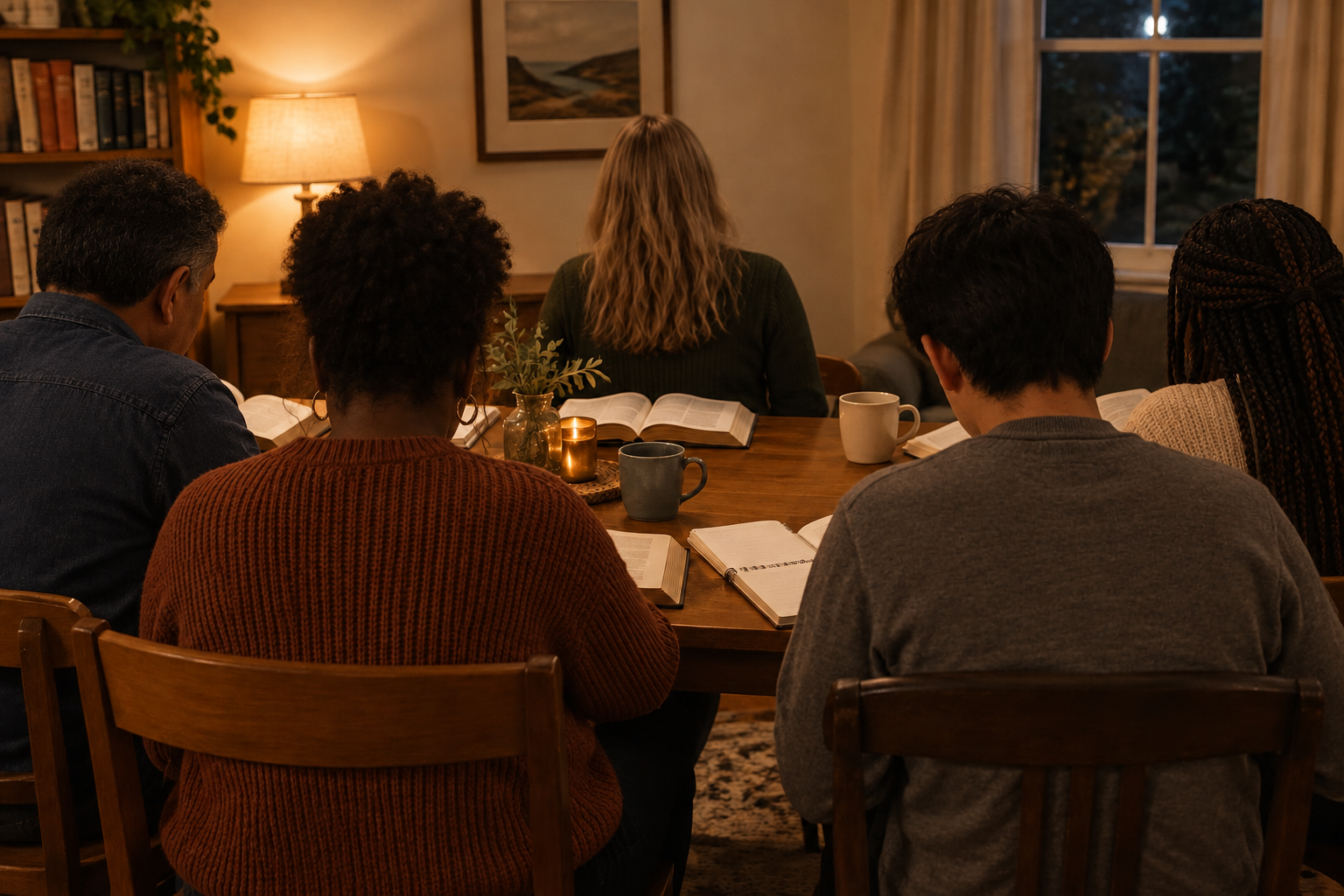
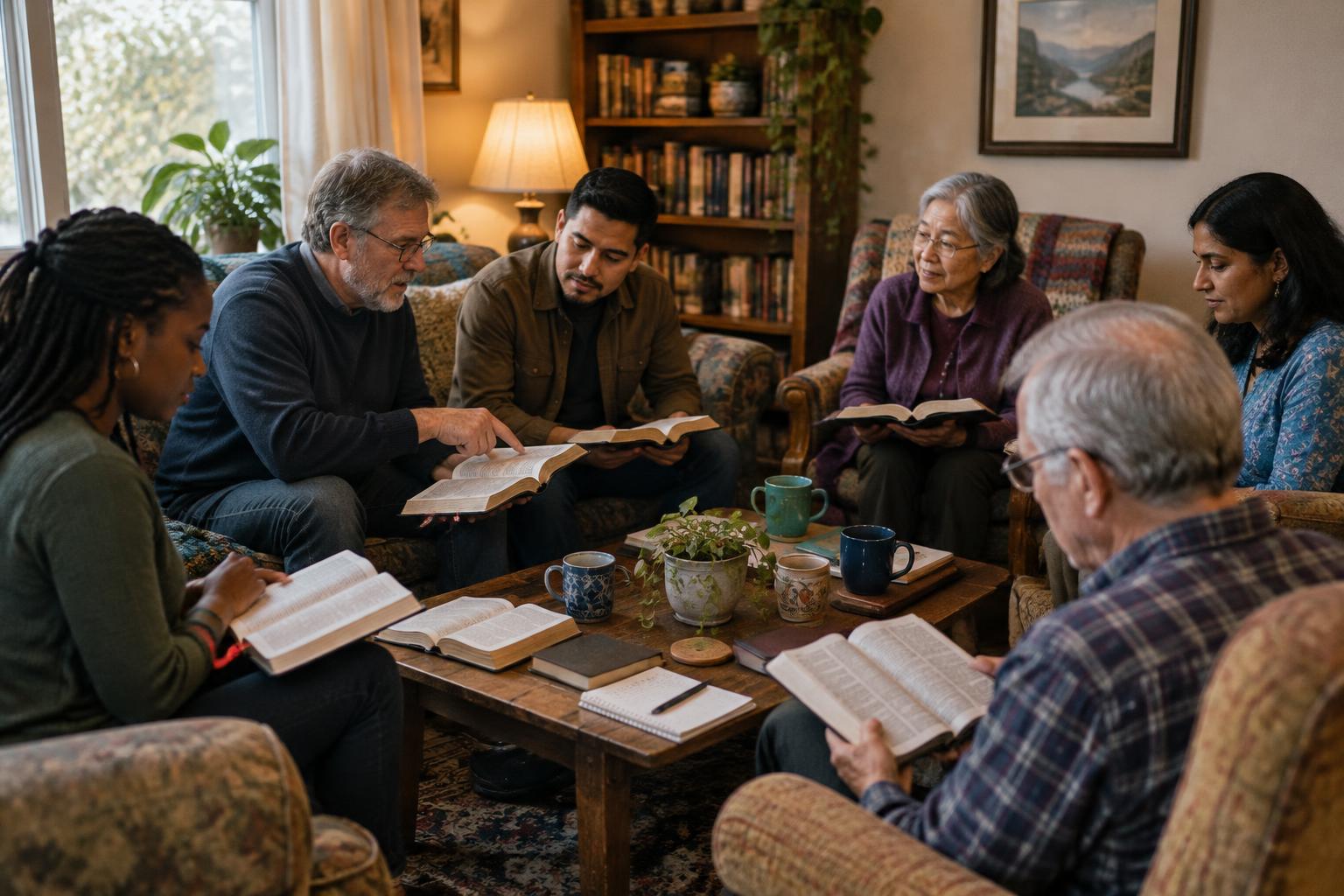
Six people of different ages and backgrounds seated together in a living room, each holding an open book of Scripture
Morning devotionsBible studyPrayerSaturday worshipThe evening tableShared mealsHousehold lifeReading the Torah togetherMorning devotionsBible studyPrayerSaturday worshipThe evening tableShared mealsHousehold lifeReading the Torah together

What this is

One family under one roof, keeping one rhythm.

Lifestyles Transitional Homes is for people who need a different way to live than the one that got them here. It is not a room handed to somebody who is then left in it. What we keep is a household: people of different ages and different stories living the Word together — eating at one table, keeping the Sabbath together, raising each other’s children together, and holding one another to something better.

It is accountable and it is structured. There is a chore list, there are house rules, and there is a curfew, and everybody in the house keeps them together. There is also schoolwork to finish, a doctor to see, a court date to make, a job to hold. Our part is the family around a person while they do the work only they can do.

What holds it together is Scripture read from the Torah — as it was first given — and lived out in ordinary hours: devotions in the morning, the Word taught at the table, prayer through the week, and worship together on Saturday.
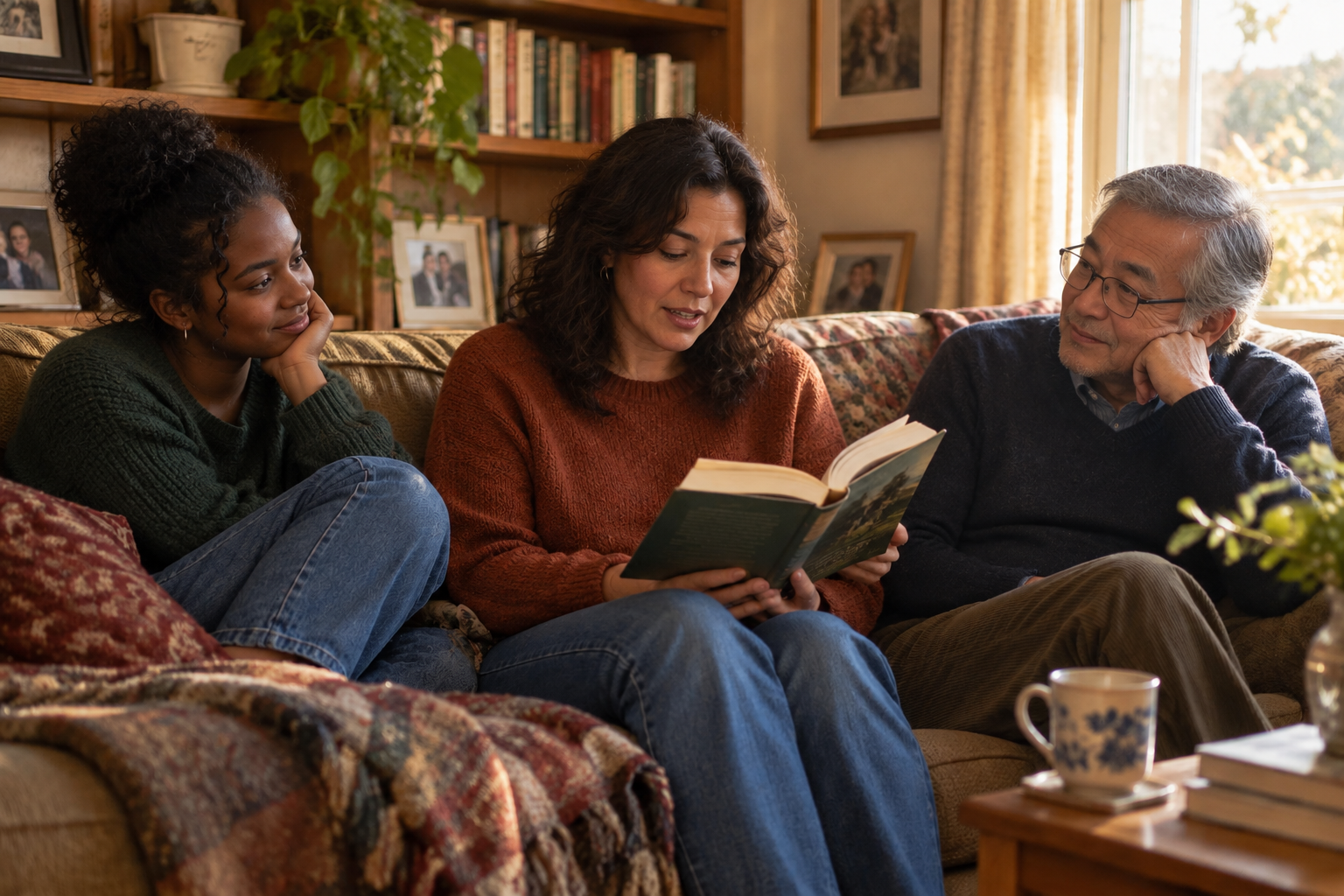
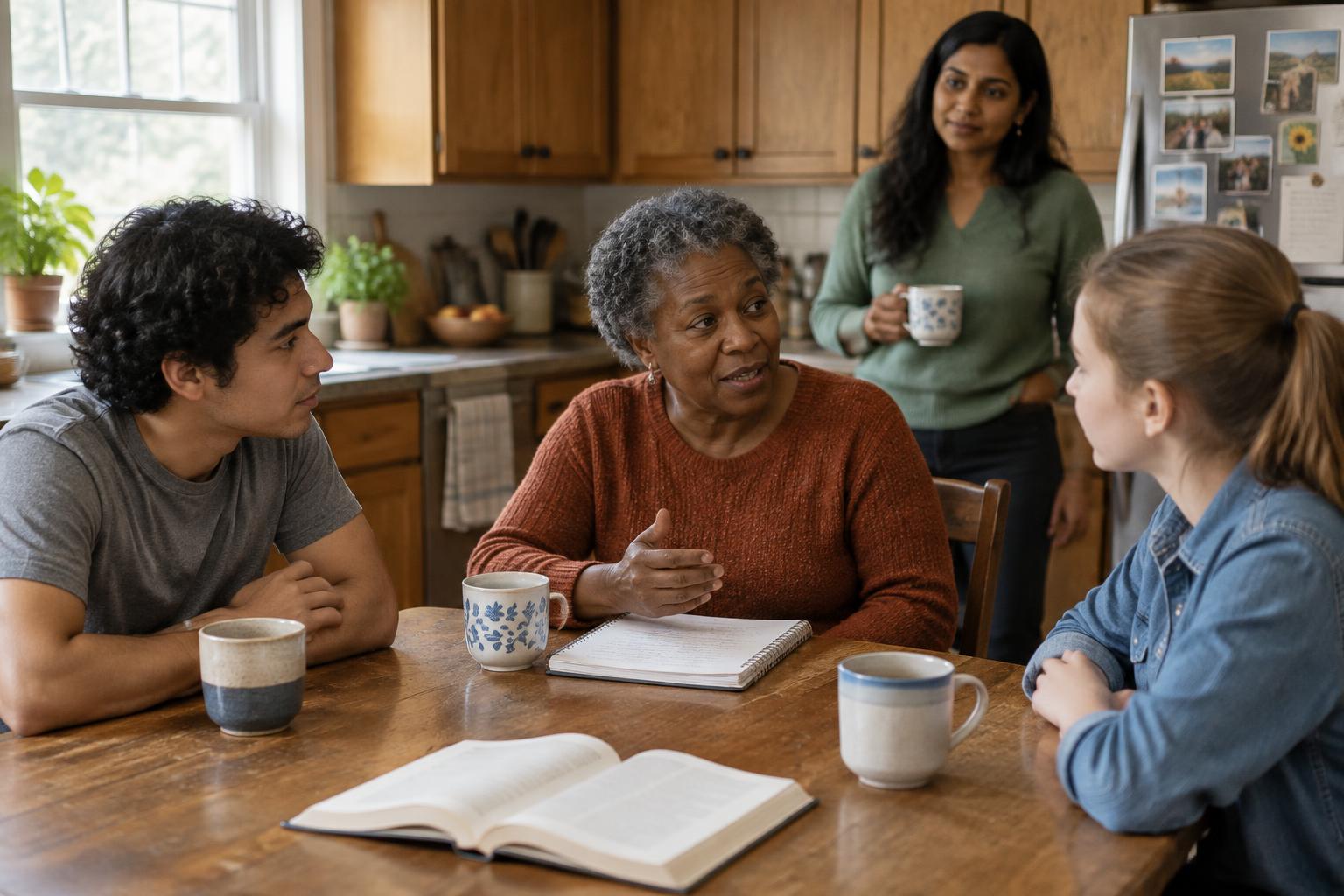
Three people of different ages and backgrounds in a lived-in living room in afternoon light, one reading aloud from an open book while the others listen
“You shall love your neighbor as yourself.”
Leviticus 19:18
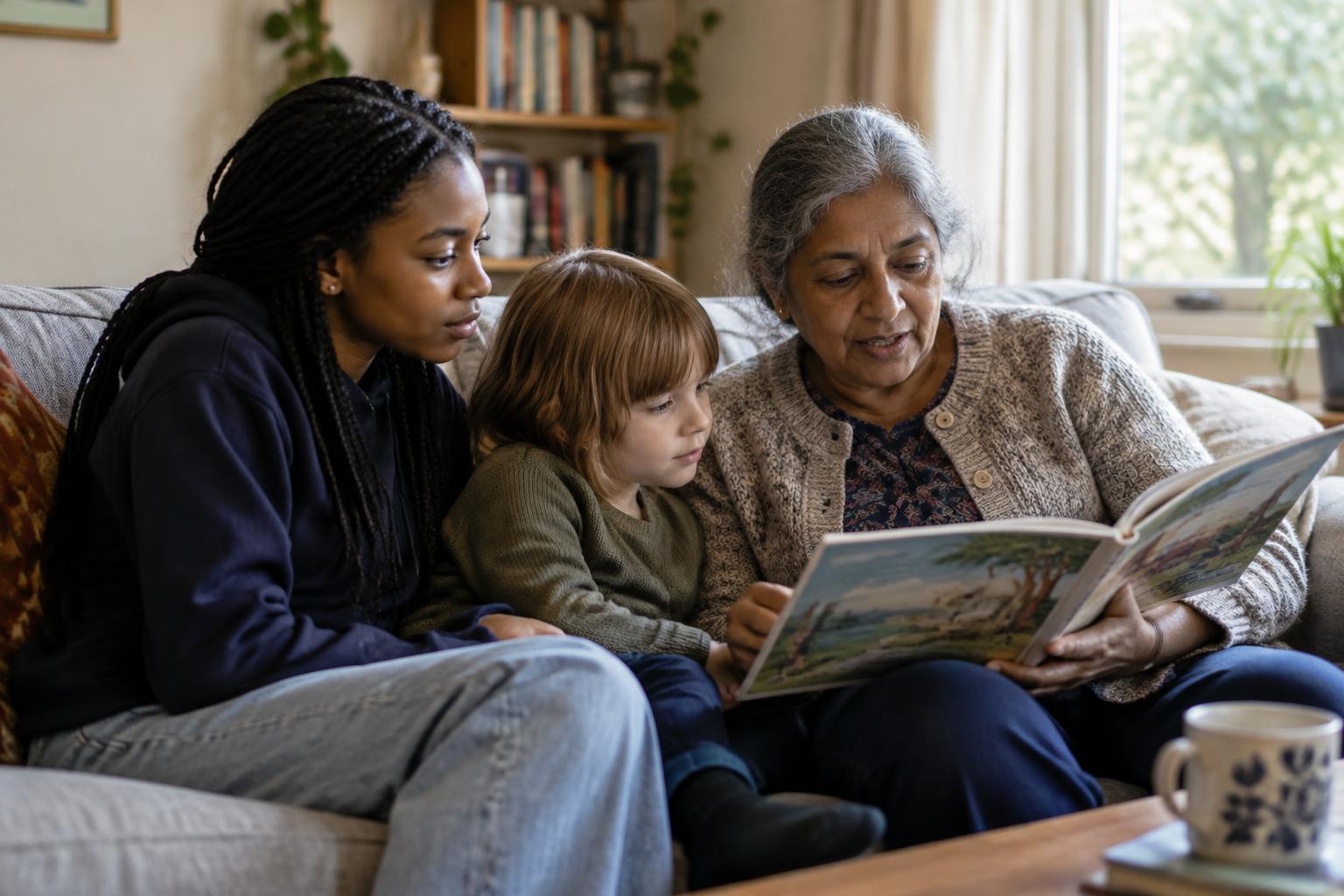
An older woman reading a picture book aloud to a teenage girl and a small child of different backgrounds, sitting together on a sofa in the evening lamplight

A house, not an hour

Not something you attend. Something you live all through the day.

Most of us were taught to keep the Word in one hour on one morning a week and then get on with life. What we do here is the opposite. The Word is taught in the house, at the table, in the kitchen, in the ordinary hours — and then it is lived in the same rooms by the same people who heard it.

That is what makes this a ministry rather than a meeting. Someone who comes to us does not hear a teaching and drive home. They eat dinner with the people who are learning it, and they wake up the next morning still in it. The teaching is the whole day, and the household is the classroom.

Nobody is asked to believe anything in order to belong here, and nobody is pressed. Our arms are open to anyone who is drawn to what we keep — reach out and we will sit down and talk it through. What is asked of you is a willingness to hear the Word taught from a Hebrew perspective, and to live alongside a household that is trying to keep it.

See how the week is shaped →

What this household is built on

Six things, and they are the whole of it.

People ask what this asks of them, and it is a fair question. This is the answer, stated before anyone picks up the phone.

I

Accountability

To the household, to the Word, and to the person you said you were going to be.

II

Responsibility

Your chores, your appointments, your court dates, your share of the house.

III

Functional living

A clean room, a kept schedule, a bill paid on time, a week that holds together.

IV

Spiritual elevation

Prayer and devotion not as a habit we perform, but as the thing that lifts a person.

V

Scriptural knowledge

Learning the Word well enough to stand on it, and to teach it to your own children.

VI

A more righteous year

The measure we actually use: better this year than last year, by the grace of God.

The chore list, the house rules, the curfew, who this is for, and how we work alongside doctors and other providers — all of it is written out plainly on one page.

Read how the household works

Who carries this

People who live it alongside the household.

Nobody runs this from an office somewhere else. The people who carry it are in the house, at the table, and in the middle of the week with everyone else.

The house manager

The house manager

Lives the life alongside the household

There is someone in the house who lives the life with everyone else — up for devotions, at the table, keeping the chore list and the house rules with the household rather than over it. They are the steady presence a person can bring a hard thing to at any hour, and the one who makes the call when something needs a call.

The teacher

The teacher

Comes to teach Scripture and to minister

A teacher comes to the house to open the Word and teach it plainly — from the Torah perspective, at a pace people can actually follow, with room for questions and disagreement. What is taught at the table is meant to be lived the same week, in the same rooms, in front of the same people.

Saturday, when the household gathers

The week has a shape, and Saturday is the day it turns on.

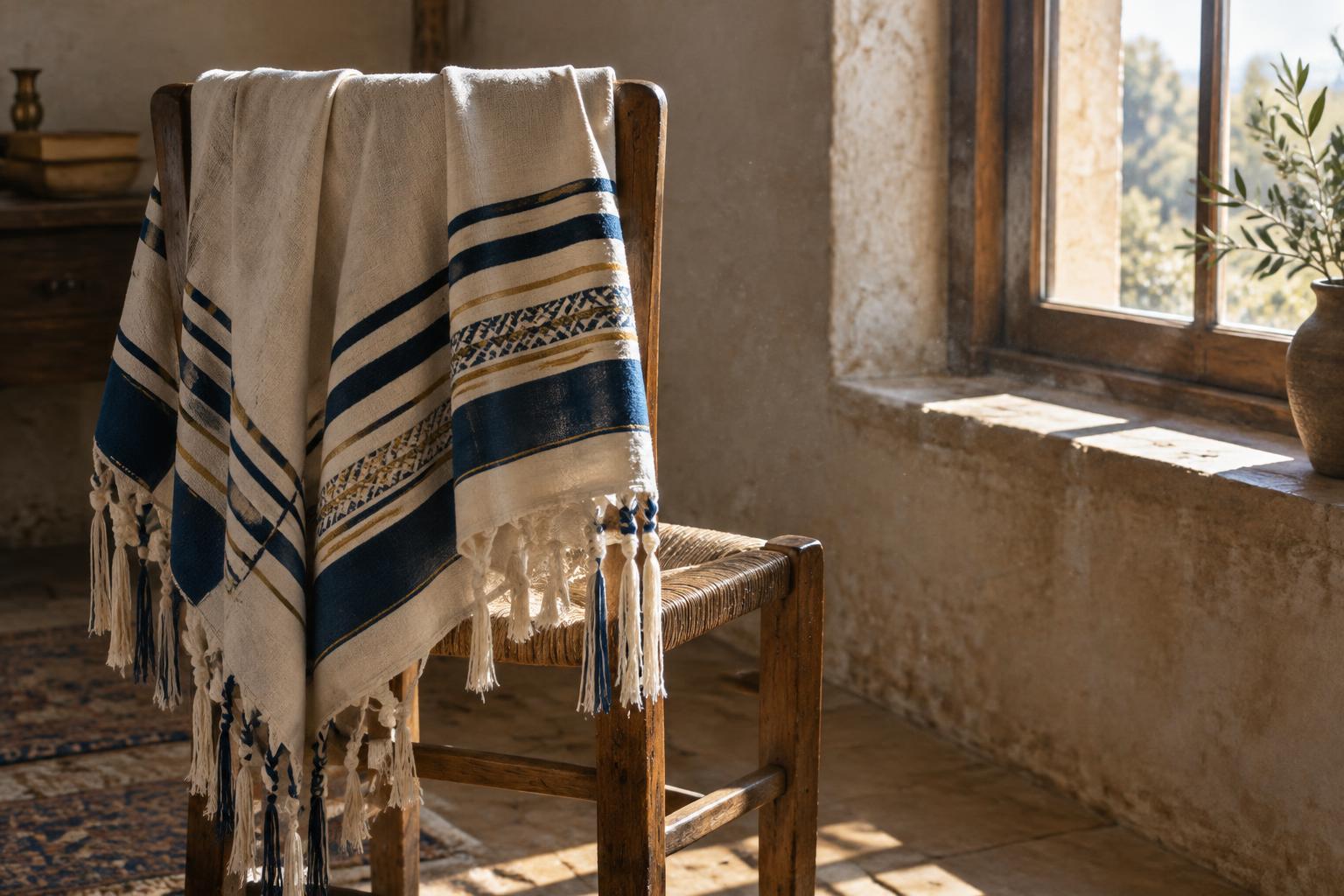
On Saturday the whole household comes together to worship — Scripture read aloud, prayer, a teaching, and the week laid down before it starts again. It is not a performance and there is no order of service to follow along with. It is a family in a living room, and the door is open to anyone who wants to come and learn with us, whether or not they ever live in the house.

See the whole week of this ministry →
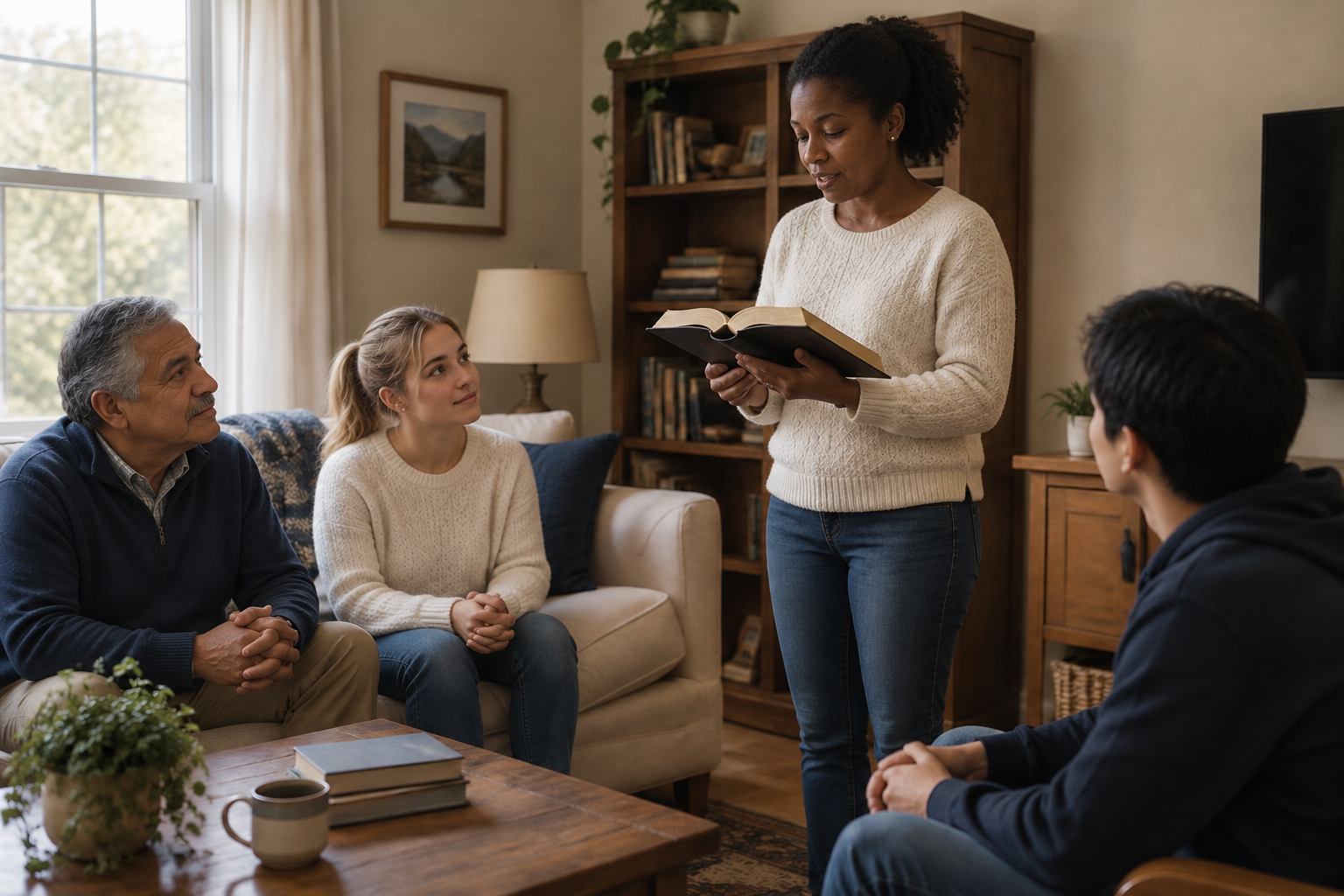
A woman of color standing in a living room reading from an open book of Scripture to three seated members of the household, all of different ages and backgrounds

The life of the ministry

Devotions, study, and prayer — kept every week, not occasionally.

This is what this ministry actually does with its days. Everyone in a household is part of it, and so is anyone in the community who wants to come and learn with us.

  • Morning Devotions

    Every weekday morning, before the day begins

    We start the day with the Word. Scripture is read aloud, a short teaching follows, and the morning is given over in prayer before anyone heads out the door. It is the hinge the whole day turns on, and guests of the household are always welcome at the table.

    In the house, and open to everyone who wants to join

  • Bible Study

    Weekly, in the evening

    A long table, open books, and a slow reading through the weekly portion and the Scriptures that surround it. Questions are welcome here and so is disagreement; we are reading to understand and to live it, not to finish on time. Study is open to the household and to anyone in the community who wants to learn with us.

    In the house, around the table

  • Prayer

    Daily, and a dedicated hour each week

    Prayer is not a program here, it is the practice. Requests sent to us are carried by name by the prayer team, and nothing shared with us is passed along. If you need prayer, ask. You do not have to be part of the program, and you do not have to explain yourself.

    In the house, and by phone for those who cannot come

  • Saturday Worship

    Saturday morning, and unhurried on purpose

    Saturday is when the whole household comes together to worship — Scripture read aloud, prayer, and the week laid down. Anyone who wants to come and learn is welcome at it.

    In the house, in the living room, with the door open

  • The Evening Table

    Friday evenings, as the week closes

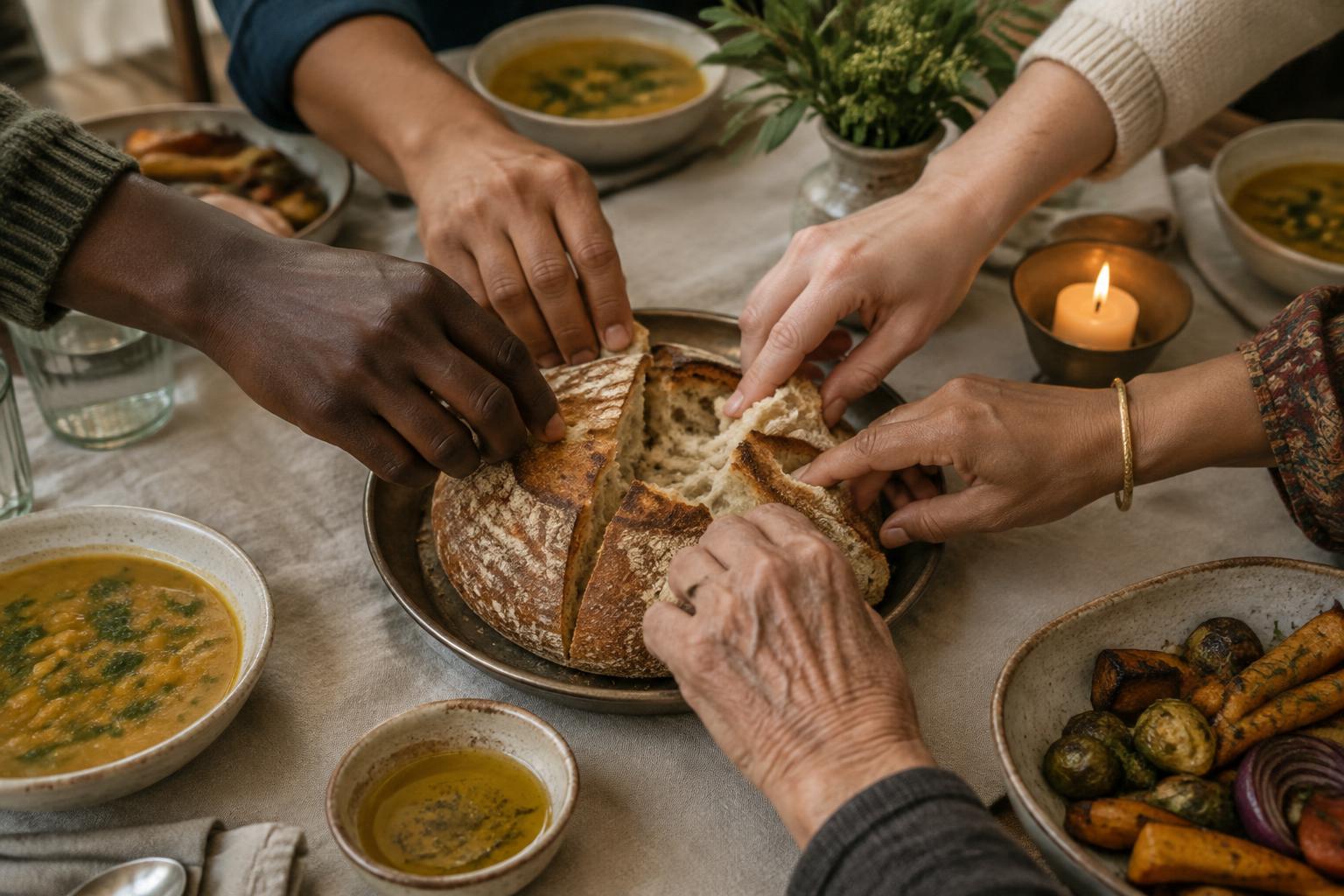
    The week ends at a set table. Bread is broken, a blessing is spoken over the household, and the meal is unhurried on purpose. Everyone at the table has a place and a part; this is where a house becomes a household and strangers become family.

    In the house, around one table

  • Foundations Study Series

    A short series, offered a few times a year

    A guided study for anyone new to reading Scripture from a Torah perspective, and for anyone in the community who wants to learn. We cover how we read, how we keep the Sabbath and the feasts in a shared house, and how a household of very different people lives as one family. No prior background is assumed.

    In the house, and online

Where this is lived

One house, and a household in it.

People come to us out of a hard season — a marriage ending, a job lost, a move across the country, a stretch of life with no one in it. What they get is not a bed and a set of rules. They get a household: bedrooms of their own, one kitchen, one table, and a family that keeps the Sabbath and reads the Torah together.

The First HouseOpen and receiving

The First House

The first house and still the heart of this work. Bedrooms of their own, one kitchen, one long table, and a household that keeps the Sabbath together. Morning devotions are held here before the day starts, and the evening meal is eaten together most nights.

Where it is exactly is shared with a household once they are accepted

Where it is exactly is shared with a household once they have been accepted, and with volunteers once they are scheduled. If you want to help make a room ready, tell us.

Talk with us

Who a household can hold

Reach out, and we will sit down with you.

Anyone who is interested is warmly invited to reach out — and every one of them is interviewed, so both sides can see whether this household is a good fit and whether it is a place they actually want to be. It is a conversation, not a screening, and there is nothing to dread in it. We will tell you honestly either way. What matters is a willingness to live as part of a family and keep the household’s rhythm with us.

Individuals

Someone on their own who needs a household rather than a room — a place to be known, fed, and expected at the table.

“It is not good that man should be alone.” — Genesis 2:18

Single parents with children

A parent raising children without a partner, who needs the weight shared and the children raised by more than one set of hands.

“You shall love your neighbor as yourself.” — Leviticus 19:18

A married couple with a child

A whole family in a hard season that needs one stable household while they find their footing, with room enough for the children.

“Teach them diligently to your children.” — Deuteronomy 6:7

Those newly arrived

People who are strangers in a place and need a door opened to them, and a household to belong to while they learn the ground.

“The stranger who dwells among you shall be to you as the native among you.” — Leviticus 19:34

One thing is asked of anyone who lives here, and it is not conversion: a commitment to hearing the Word from a Hebrew perspective. Nobody has to join anything, and nothing anywhere says you have to become anything. You are welcome to convert if you want to — and just as welcome if you never do.

How the household works

Our welcome

Our arms are open — and it starts with a conversation.

Anyone who likes what they find here and wants to be closer to it is warmly invited to reach out. We do not take in everyone who asks: we sit down with every person who is interested, so both sides can see whether this household is a good fit and whether it is a place they actually want to be.

There is no pressure in that conversation and nothing to dread in it. Come as you are and take your time.

Open arms

Whoever you are, and whatever you are carrying — you are welcome to reach out, come and see, and take your time.

An interview, both ways

Everyone who is interested sits down with us first. It is a two-way conversation: we are finding out whether this is right for you, not only whether you are right for us.

Convert if you want to

If you come to want it, it is here for you. It is a door that stands open, never a gate you must pass to belong.

Never required

Nothing says you have to. No one is asked to declare themselves anything, and no one is pushed toward anything.

Our arms are open. Reach out, come and see, and decide nothing until you want to.

How you can help

Three ways to put your hand to this.

Give

Give

Giving is what raises the quality of the help we can offer, widens what we can give, and opens the next house — because there is not enough housing. It also covers the things people really need, like clothing.

Give to the work
Volunteer

Volunteer

We need hands that can swing a hammer, cook a meal, tutor a child, drive a van, or sit with someone and listen. Tell us what you are good at.

Offer your hands
Pray

Pray

The work does not hold together without prayer. Send us a request, or join the prayer team that carries every one of them by name.

Send a prayer request

Scan to give

Point a phone at this, and a gift can be made in a minute.

The code opens the giving page, where a gift is made securely by card. Print it on a bulletin or a flyer, or keep it on your own phone and show it to someone who wants to help. Card payments turn on once the ministry’s payment account is set up — until then, call us and we will take your gift by hand.

QR code that opens https://lifestylestransitionalhomes.com/give/

Scan to give to Lifestyles Transitional Homes.

https://lifestylestransitionalhomes.com/give/

If you need a household, or you want to help one, call us.

Whether you are asking about a place in a household, you want to volunteer, or you have a house or a property this ministry could use — the phone is the fastest way to reach us, and a person answers.